play_arrow0:00 Introduction
Problems in your code and how to solve them
SyntaxError-> something wrong with your
Errors are For you to solve
play_arrow0:24 Exceptions
play_arrow0:52 SyntaxError
---- see code
x = int(input("What's x?"))
print (f"x is {x}" )
---
play_arrow3:29 ValueError
6:57 "ValueError: invalid literal for int() with base 10: 'cat'"
what is int-> converts users input to integer
play_arrow8:52 try, except
"ValueError"
----code here
try
x = int(input("What's x?"))
print (f"x is {x}" )
except ValueError:"
-----
code here
----
try:
x = int(input("What's x?"))
print (f"x is {x}" )
except ValueError:
print("x is not an integer")
------
There are other errors you can catch
Python-Except is anything is wrong
Problems: Hides other bugs
and you can't determine which other bugs and difficult to remedies it later on
Figure out "WHAT COULD HAPPEN" and determine explicitly
It takes practice to determine which errors will have
----
play_arrow14:18 NameError
//
try:
x = int(input("What's x?"))
except ValueError:
print("x is not an integer")
print (f"x if {x}")
----
NameError <= Refer to a code that you shouldn't do
`

Why is x is NameError
-Due to order of operations
Value Error=
error is in the right
no copy value on the left
even though we see x... but the left is not evaluated
line 6 only looks it is defined
play_arrow18:35 else
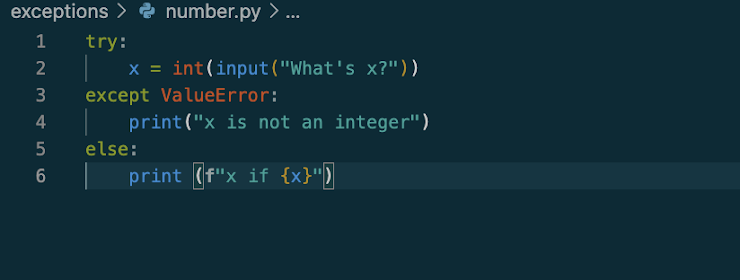
-----code here
'try:
x = int(input("What's x?"))
except ValueError:
print("x is not an integer")
else:
print (f"x if {x}")
'
---
play_arrow22:40 Reprompting, break
the code presented:
---
try:
x = int(input("What's x?"))
except ValueError:
print("x is not an integer")
else:
print (f"x if {x}")
---
Loop-something that happens again
Prompt the user for x so ask for a value until they then complied with a value that we want
use break to breakout of the loop
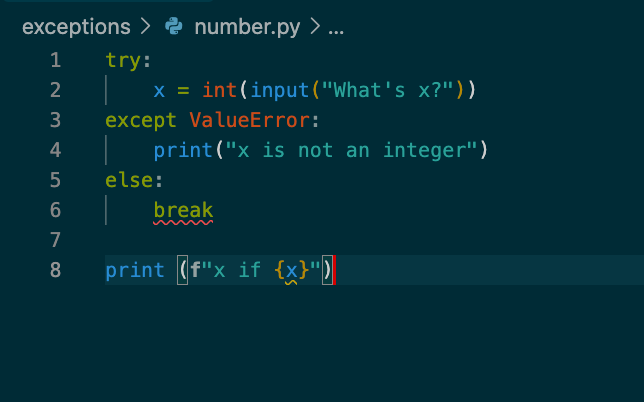
if we just print-it doesnt break in the loop
can i use break in else?
you can use break in loop to breakout and also in conditional (if else,) and it's not restrictive
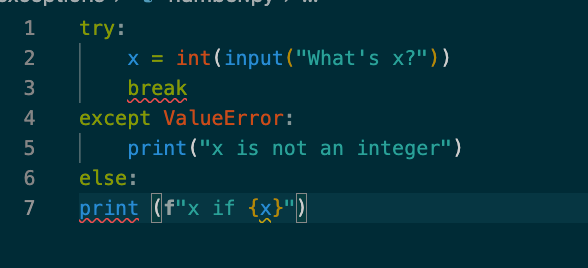
if nothing goes wrong, it will continue
while True:
try:
x = int(input("What's x?"))
break
except ValueError:
print("x is not an integer")
print(f"x is {x}")
----
play_arrow29:50 get_int
-get int from the user
-share with other people
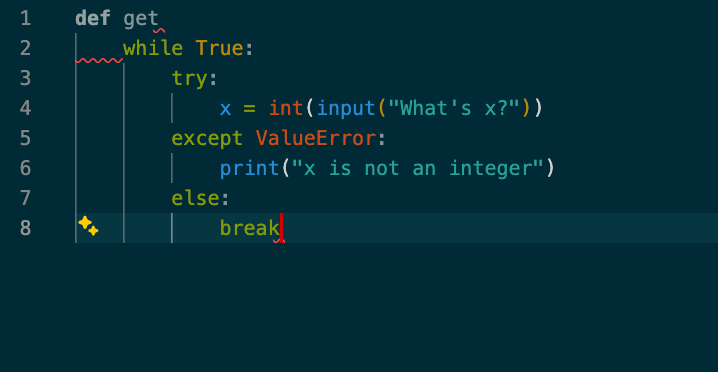
def get
while True:
try:
x = int(input("What's x?"))
except ValueError:
print("x is not an integer")
else:
break
return
-------
def main()
x = get_int():
print(f"x {x}")
def get_int():
while True:
try:
x = int(input("What's x?"))
except ValueError:
print("x is not an integer")
else:
break
return x
main()
---
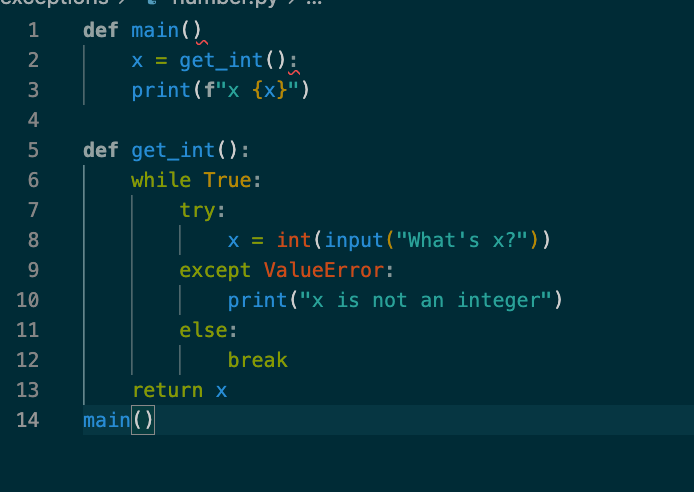
def main():
x = get_int()
print(f"x {x}")
def get_int():
while True:
try:
x = int(input("What's x?"))
except ValueError:
print("x is not an integer")
else:
break
return x
main()
-
return vs
return-return a value
break -break out of loop and might also return a v alue
play_arrow35:48 pass
play_arrow41:32 Function Arguments
play_arrow43:52 Conclusion