play_arrow0:00 Introduction
play_arrow0:24 Loops
play_arrow0:50 cat.py
play_arrow3:24 while
Use diamonds for questions
The code
_______
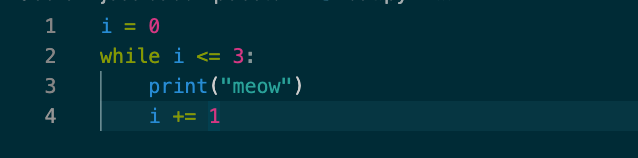
i = 0
while i <= 3:
print("meow")
i += 1
_____
play_arrow16:21 for and list
for and ls
ls= adding to the strings
all variables in one place
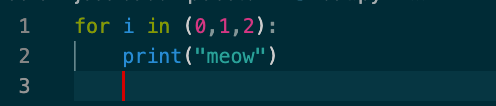
Why is this poorly written
-you need to mention everytime to be able to print meow
-Need to look at the extremes,
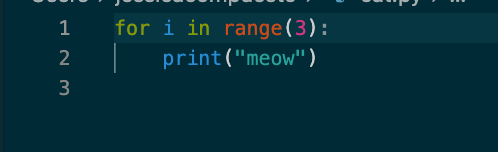
If you can meow in a million times, you can just type in 1M in the range and not manually putting it like in the previous code
naming a variable under single underscore to make it "pythonic"
for _ in range(3):
print("meow")
---
print("meow" *3)
result= '
meowmeowmeow
------
/n = if we want to have spaces
print("meow\n" * 3)
result
meow
meow
meow
------
print("meow\n" * 3, end="")
result:
meow
meow
meow
---------
play_arrow27:00 Validating Input
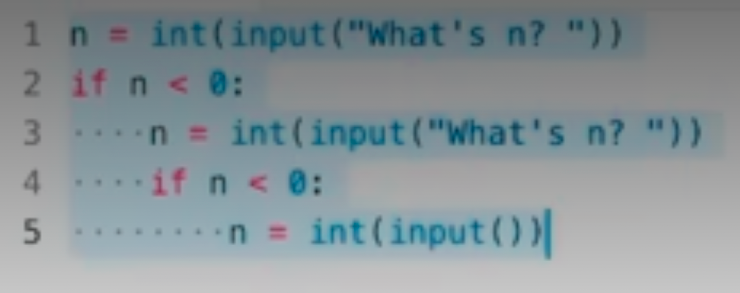
infinite loop= goes
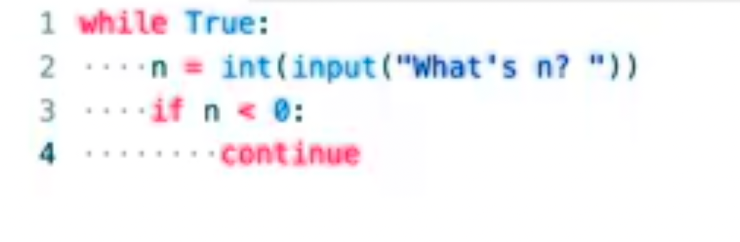
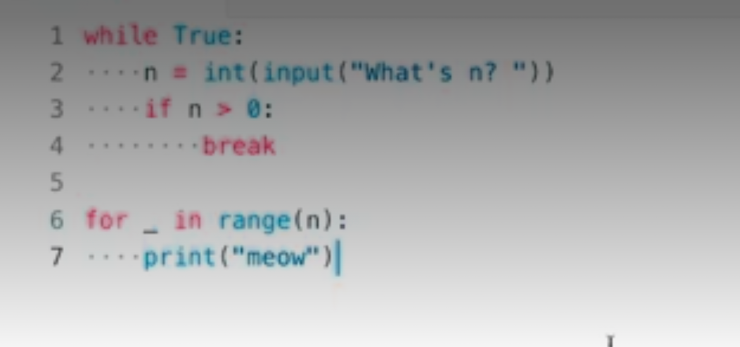
----
while True:
n = int(input("What's n?"))
if n > 0:
break
for _ in range (n):
print("meow")
#we meow with the given number)
#common paradign in python but only until the user gives you the value
-----
32:34
def (main):
meow(3)
def meow(n):
for _ in range(n):
print("Meow!")
----
def (main):
number= get_number()
meow(3)
def get_number():
while True:
n=int(input("What's n" ))
return n
def meow(n):
for _ in range(n):
print("Meow!")
main()
-----
def main():
number = get_number()
meow(number)
def get_number():
while True:
n = int(input("What's n"))
if n > 0:
break
return n
def meow(n):
for _ in range(n):
print("Meow!")
main()
play_arrow34:59 Iteration with Lists
How to print list
students = ("Hermione", "Harry", "Ron")
print()
----
students = ("Hermione", "Harry", "Ron")
print(students[0])
----
students = ("Hermione", "Harry", "Ron")
print(students[0])
print(students[1])
print(students[2])
-----
Can use a For Loop to reitierate anything
students = ("Hermione", "Harry", "Ron")
for student in students:
print(student)
//i could use underscore but it will be too cryptic
for student in students:
print(s)
students = ("Hermione", "Harry", "Ron")
for student in students:
print(student)
//
len -will tell you the length
students = ("Hermione", "Harry", "Ron")
for i in range(lens(students)):
---------------------------
students = ("Hermione", "Harry", "Ron")
for i in range(lens(students)):
print(i+1, students(i))
play_arrow45:47 Dictionaries
dict ==> dictionaries data structure that allow you to associate
keys and values
ls-mutliple set of values vs dictionaries: more than words can be other variables
//
students = ("Hermione", "Harry", "Ron", "Draco")
houses = ("Gryffindor", "Gryffindor", "Gryffindor", "Slytherin")
for i in range(lens(students))
print(i+1, students(i))
{} <-- curly braces
--
students = {
"Hermione": "Gryffindor",
"Harry": "Gryffindor",
"Ron": "Gryffindor",
"Draco": "Slytherin",
}
print(students["Hermione"])
print(students["Harry"])
print(students["Ron"])
print(students["Draco"])
------------
students = {
"Hermione": "Gryffindor",
"Harry": "Gryffindor",
"Ron": "Gryffindor",
"Draco": "Slytherin",
}
print(students["Hermione"])
print(students["Harry"])
print(students["Ron"])
print(students["Draco"])
for student in students:
print(student)
----
students = {
"Hermione": "Gryffindor",
"Harry": "Gryffindor",
"Ron": "Gryffindor",
"Draco": "Slytherin",
}
print(students["Hermione"])
print(students["Harry"])
print(students["Ron"])
print(students["Draco"])
for student in students:
print(student, students[student])
-----
students = {
"Hermione": "Gryffindor",
"Harry": "Gryffindor",
"Ron": "Gryffindor",
"Draco": "Slytherin",
}
print(students["Hermione"])
print(students["Harry"])
print(students["Ron"])
print(students["Draco"])
for student in students:
print(student, students[student], sep=",")
-----
play_arrow57:02 Lists of Dictionaries
students = [
{"name": "Hermione", "house": "Gryffindor", "patronus": "Otter"},
{"name": "Harry", "house": "Gryffindor", "patronus": "Stag"},
{"name": "Ron", "house": "Gryffindor", "patronus": "Jack Ruselle"},
{"name": "Draco", "house": "Slytheric", "patronus": "None"},
]
None---> literally None
First letter is capital
No need to put "" in none
------
students = [
{"name": "Hermione", "house": "Gryffindor", "patronus": "Otter"},
{"name": "Harry", "house": "Gryffindor", "patronus": "Stag"},
{"name": "Ron", "house": "Gryffindor", "patronus": "Jack Ruselle"},
{"name": "Draco", "house": "Slytheric", "patronus": None},
]
for student in students:
print (student["name"])
Result:
Hermione
Harry
Ron
Draco
---
for student in students:
print (student["name"], student["house"],sep="," )
----
final
students = [
{"name": "Hermione", "house": "Gryffindor", "patronus": "Otter"},
{"name": "Harry", "house": "Gryffindor", "patronus": "Stag"},
{"name": "Ron", "house": "Gryffindor", "patronus": "Jack Ruselle"},
{"name": "Draco", "house": "Slythericn", "patronus": None},
]
for student in students:
print (student["name"], student["house"],sep="," )
play_arrow1:05:02 Nested Loops
Convert this
print ("#")
print ("#")
print ("#")
to this
for _ in range(3):
print("#")
-------
def main():
print_column(3)
def print_column(height):
for _ in range (height):
print("#")
main()
-----
def main():
print_column(3)
def print_column(height):
for _ in range (height):
print("#\n"* height, end="")
main()
---
def main():
print_row(4)
def print_row(width):
print("?"*width)
main()
result
????
----
def main():
print_square(3)
def print_square(size):
for i in range(size):
main()
----
def main():
print_square(3)
# for each row in square
def print_square(size):
for i in range(size):
#for each brick in row
for j in range(size):
#print brick
print("#", end="")
print()
main()
why do i have print outside inner loop but inside inner loop
so that it prints for each row and every brick
def main():
print_square(3)
def print_square(size):
for i in range(size):
print("#"* size)
main()
----
def main():
print_square(3)
def print_square(size):
for i in range(size):
print_row(size)
def print_row(width):
print("#"*width)
main()
---in decomposing it
play_arrow1:20:17 Conclusion
Projects
camelCase
with debugging
camelCase=input("")
snake_case=""
for i in range(len(camelCase)):
print("camelCase[i]" + camelCase[i])
if camelCase[i].isupper():
snake_case += "_" + camelCase[i].lower()
else:
snake_case += camelCase[i]
print("snake_case" + snake_case)
print("snake_case:", snake_case)
Final Output
camelCase = input("camelCase: ")
snake_case = ""
for i in range(len(camelCase)):
if camelCase[i].isupper():
snake_case += "_" + camelCase[i].lower()
else:
snake_case += camelCase[i]
print("snake_case:", snake_case)
////
camelCase = input("camelCase: ")
snake_case = ""
for i, char in enumerate(camelCase):
if char.isupper():
if i > 0:
snake_case += "_"
snake_case += char.lower()
else:
snake_case += char
print("snake case:", snake_case)
amount_due = 50
while amount_due > 0:
coin = int(input("Insert Coin: "))
if coin == 5 or coin == 10 or coin == 25:
amount_due -= coin
if amount_due > 0:
print("Amount Due:", amount_due)
else:
print("Change Owed:", abs(amount_due))
break