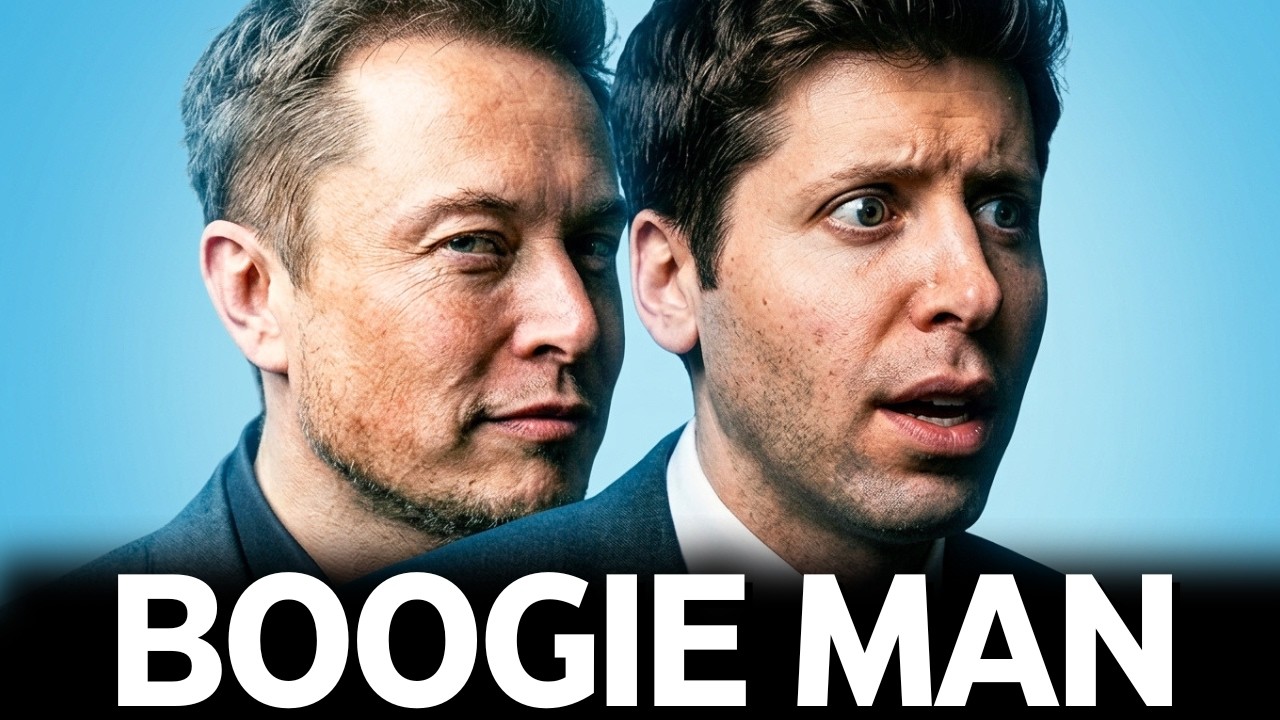
This analysis explores the high-stakes legal confrontation between Elon Musk and OpenAI leadership, centered on a 2026 trial in the Northern District of California
play_arrow9:28 Strongest arguments from both sides
play_arrow9:36 Elon Musk arguments
play_arrow14:41 Sam Altman arguments
play_arrow14:47 #1 The conversions
play_arrow18:36 Elon left voluntarily in 2018
play_arrow18:44 Elon founded xAI and invested $10s of billions
play_arrow20:03 Legal precedent is a 100-year question
play_arrow25:11 Founders must choose their structure on Day 1
play_arrow25:16 The way Anthropic did when it was founded as a Public Benefit Corporation
The case examines whether a multi-billion dollar nonprofit organization can transition into a for-profit entity while allowing insiders to retain significant equity, a decision that could redefine the legal landscape for every charitable institution in the United States
Core legal conflict and allegations
play_arrow1:11 The case centers on whether a 501(c)(3) public charity can legally convert into a for-profit company after taking tax-deductible donations under a promise to remain a nonprofit
play_arrow8:13 Musk’s legal team argues that assets held in public trust belong to the public benefit purpose stated in the founding documents, not the founders or private investors
play_arrow12:42 The plaintiff claims today’s OpenAI is the "opposite" of its 2015 charter, citing closed-source models and aggressive commercial partnerships with Microsoft as evidence of abandoning the original mandate
play_arrow9:03 Musk alleges that leadership "stole" a charity, warning that a verdict in favor of OpenAI would create a tax arbitrage precedent where founders build value in a tax-exempt entity only to pocket the equity later
OpenAI’s defense and structural justification
play_arrow14:47 OpenAI contends the conversions were not secret; they were reviewed by top-tier counsel and disclosed to the IRS and Attorneys General in California and Delaware
play_arrow16:45 The defense argues that training frontier AI models requires tens of billions of dollars, a scale of capital impossible to raise through traditional 501(c)(3) charitable donations
play_arrow16:04 Leadership points out that the OpenAI Foundation retains a 26% stake valued at $130 billion, making it one of the largest charitable endowments in modern history
play_arrow18:39 OpenAI argues the lawsuit is competitive in nature, noting that Musk left the board voluntarily and founded xAI, a direct for-profit competitor
National implications for the charitable sector
play_arrow22:10 The verdict affects over 3% of America's GDP, governing nonprofit hospitals, university endowments like Harvard and Yale, and massive research foundations
play_arrow23:25 The case is compared to the 1990s Blue Cross hospital conversions, though those required value to flow to a successor charity rather than allowing insiders to hold direct equity
play_arrow28:11 A win for Musk might force founders to choose Public Benefit Corporation (PBC) status from day one, whereas an OpenAI win could trigger a wave of nonprofit-to-for-profit conversions across tech and biotech
Summary
The lawsuit between Elon Musk and OpenAI represents a pivotal moment for the intersection of technology and law. Beyond the personal friction between tech titans, the 2026 trial addresses whether the century-old rules governing public trusts remain enforceable in the age of artificial intelligence. The final ruling by Judge Yvonne Gonzalez Rogers will likely determine the structural guardrails for future AI development and the integrity of charitable tax deductions for decades to come.