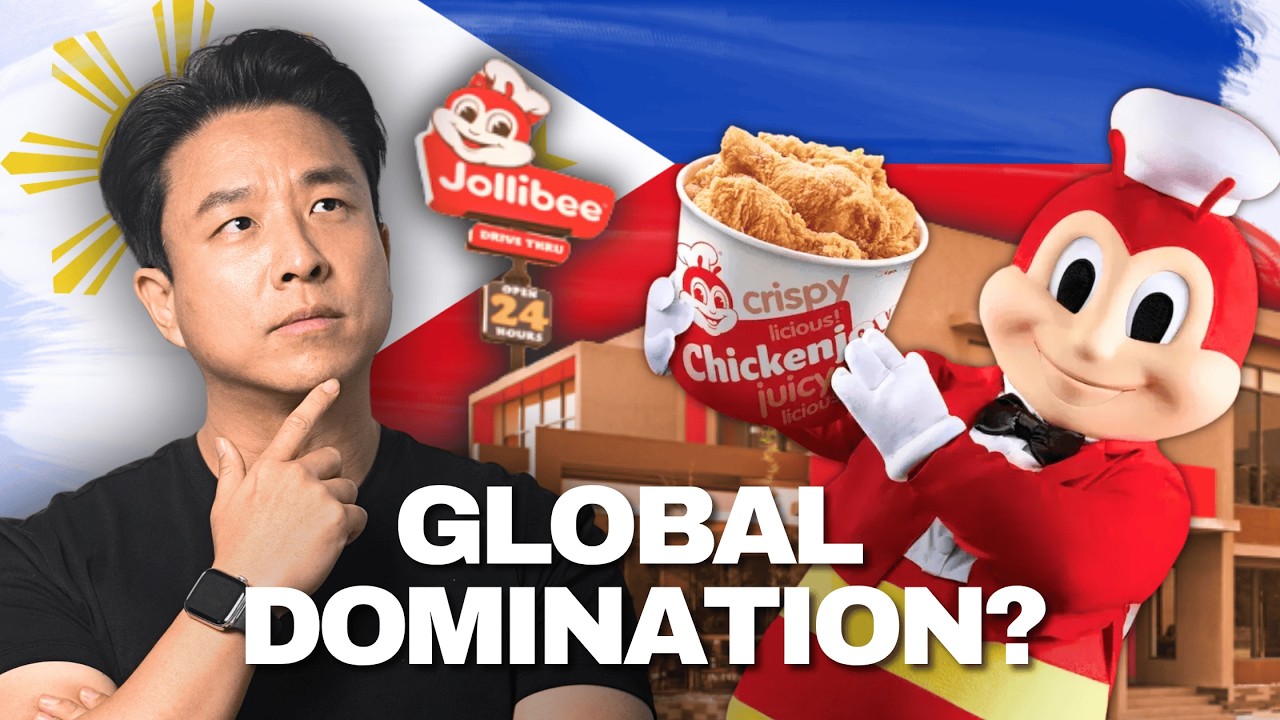
This analysis explores the business evolution of Jollibee, a Filipino fast-food giant that transformed from a small ice cream parlor into a multi-billion dollar global empire. The video details how Jollibee defeated McDonald's in its home market, survived disastrous international expansion attempts, and is now executing a sophisticated "master plan" that leverages the global "K-wave" and strategic acquisitions to dominate the fried chicken industry.
Domestic Origins and the Cultural Advantage
play_arrow5:52 Jollibee began as two ice cream parlors in 1975, but founder Tony Tan Caktiong pivoted to hot food and burgers after customers consistently requested savory meals
play_arrow9:25 Rather than selling out to McDonald's, Caktiong reverse-engineered their operational systems while doubling down on Filipino taste preferences
play_arrow10:12 Jollibee won the Philippines by offering rice as a staple, sweeter savory profiles like Jolly Spaghetti, and menu items designed for the five-to-six-meal "merienda" culture
play_arrow12:47 The brand spent years obsessively testing marinades and crusts to create a product that eventually beat major American chains in independent taste tests
International Hardships and Strategic Recovery
play_arrow16:07 During the 1990s, Jollibee attempted a "plant the flag" strategy that failed because it softened its Filipino identity and cut the international division off from its home-grown R&D expertise
play_arrow19:44 Jollibee rebuilt its global presence by following the 10-12 million overseas Filipino workers who provided a guaranteed, emotionally devoted customer base in new markets
play_arrow22:11 After years of losing money in the US, the brand stabilized by refocusing on food quality and its core Filipino-American community before pursuing mainstream growth
play_arrow25:01 In recent years, Jollibee successfully transitioned from a "Filipino restaurant" to a "premium fried chicken chain," fueled by viral social media attention and awards
The Global "Master Plan" and the Korean Wave
play_arrow28:35 Jollibee has built a diverse portfolio by acquiring major brands including Smashburger, The Coffee Bean & Tea Leaf, and the Michelin-starred Tim Ho Wan
play_arrow30:03 In 2024 and 2026, Jollibee spent hundreds of millions to acquire Compose Coffee and Shabu All Day, seeking to learn from Korea's highly sophisticated fried chicken and franchise systems
play_arrow33:15 Jollibee is capitalizing on the global popularity of Korean culture because Korean-style fried chicken shares a similar sweet-savory flavor profile with Filipino chicken, making global consumers more receptive to Jollibee's menu
play_arrow36:34 To fund its goal of 500 North American locations, Jollibee plans to spin off its international business and list it on a US stock exchange by late 2027
Summary
Jollibee's success is a case study in leveraging cultural identity as a competitive advantage. By mastering "Filipino taste" and surviving early expansion failures, the company established a loyal diaspora foundation. Now, Jollibee is moving beyond its ethnic roots by acquiring global brands and aligning its flavor profiles with the rising popularity of Korean food culture, positioning itself as a legitimate contender for the title of the world's largest food company.