Beautiful piano from 1895
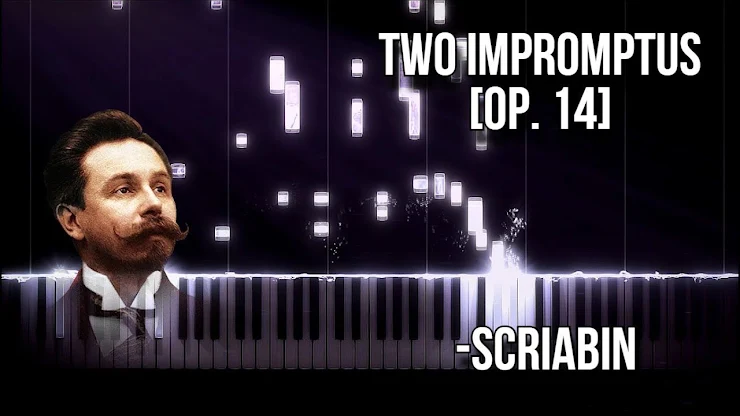
Two Impromptus - Op. 14 - Scriabin
play_arrow0:06 1. Allegretto in B Major
play_arrow1:10 Melody changes
play_arrow1:16 More emotion
play_arrow2:08 Ending
play_arrow2:33 2. Andante cantabile in F-sharp Minor
play_arrow4:16 Melody changes
play_arrow5:39 Beautiful piano visualizer, soft melody
Summary
Alexander Scriabin’s Two Impromptus actually refers to two different sets of works from his early-to-mid period. Both reflect his evolution from a Chopin-inspired Romantic to the mystical, harmonically complex composer he eventually became.
The most frequently performed are Op. 12 and Op. 14.
## 2 Impromptus, Op. 12 (1895)
These are staples of the late Romantic piano repertoire. They are deeply atmospheric and showcase Scriabin’s gift for lush, wandering melodies.
- No. 1 in F-sharp major: This piece is characterized by its "vibrating" or shimmering quality. It uses a lot of polyrhythms (triplets against duplets) that create a dreamy, indecisive mood.
- No. 2 in B-flat minor: Much darker and more dramatic. It features a sweeping, melancholic melody with a restless accompaniment, very much in the vein of a Chopin Nocturne but with Scriabin’s signature "perfumed" harmonies.
## 2 Impromptus, Op. 14 (1895)
Published shortly after Op. 12, these continue the exploration of delicate, fleeting emotions.
- No. 1 in B major: Noted for its elegance and classic ABA structure. It feels light, almost like a caprice.
- No. 2 in F-sharp minor: A more brooding, introspective work. It’s shorter and more concentrated than the Op. 12 set, showing his move toward more condensed musical ideas.
### Musical Characteristics
If you are looking to play or analyze these, keep an eye out for:
- Complex Rhythms: Scriabin loved using $3$ against $2$ or $4$ against $3$ to blur the bar lines.
- Harmonic Tension: While these are still "tonal," he uses extended chords (9ths and 11ths) that make the music feel like it’s floating.
- Pedaling: These pieces require a "half-pedal" technique to maintain clarity while capturing the resonance Scriabin intended.
Note: Scriabin also wrote two "Impromptus à la Mazur" (Op. 2 and Op. 7), but they are usually categorized separately due to their specific dance rhythms.