All about the cosmos.
Starship V3 rocket by SpaceX
play_arrow0:30 Ignition
play_arrow0:40 Modern rocket launch
play_arrow3:04 Separation
Civilization 6 rocket launch
play_arrow0:01 Rocket launch
play_arrow0:06 Accelerating
Moon base
play_arrow0:59 Jeff Bezos owned Blue Origin will build a moon base
play_arrow5:18 Ad: Ekster wallet for your credit cards, money and change
play_arrow6:17 Moon Base One
play_arrow6:31 Moon landing site: Shackleton Connecting Ridge
play_arrow6:37 One of the most valuable pieces of land on the moon
play_arrow7:37 Where frozen water ice is believed to be hiding
play_arrow7:44 China will land their robot lunar mission nearby
play_arrow8:56 The moon is full of metal, more than you think
play_arrow16:36 NASA chose Blue Origin to deliver these moon rovers
play_arrow17:48 Can carry two astronauts in spacesuits
play_arrow17:50 200km range, 10kph max speed
Apollo 15 operations on the Lunar surface
play_arrow0:00 Start
play_arrow0:37 Drop a feather and hammer at the same time on the moon!
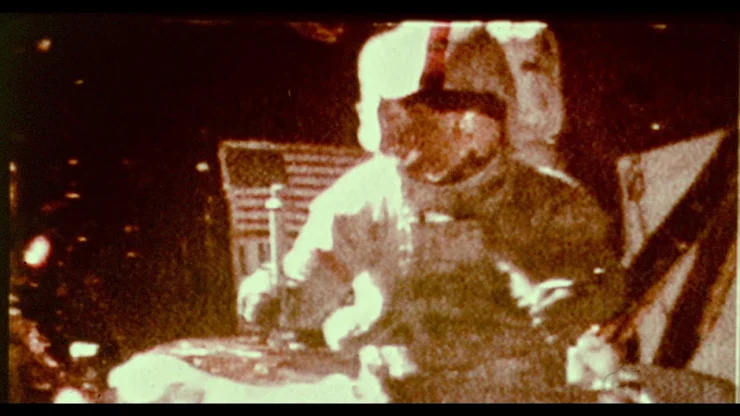
If you drop a feather and a hammer at the same time, which hits the ground first?
- On Earth: the hammer
- On the moon: both hit at the same time
Feather: 0.03kg (Falcon feather)
Hammer: 1.32kg (Aluminum geological hammer)
The famous experiment on the moon that proves Galileo was right, that objects of different mass accelerate at the same rate in a vacuum (no atmosphere).
First words by Neil Armstrong when stepping on the Moon's surface
play_arrow3:30 That's one small step for man, one giant leap for mankind
Building a city on the Moon
play_arrow0:43 If you get sick or injured on the moon, you can come home
play_arrow0:48 The journey to Mars is a one-way trip
play_arrow1:23 Tesla mission: Building a world of amazing abundance
play_arrow3:04 Mass driver aka Rail gun
play_arrow3:43 11.2 km/s = Earth escape velocity
play_arrow3:48 2.38 km/s = Moon escape velocity (almost 8,600 km/h)
play_arrow4:28 Who will build all this crazy stuff on the moon?
play_arrow4:36 Robots will build the infrastructure on the moon
play_arrow5:33 Von Neumann probe: Make a spacecraft to explore the galaxy over millions of years
SpaceX Starship Flight 14: Everything that Happened in 15 Minutes
play_arrow0:05 Start
play_arrow2:35 Separation
play_arrow6:54 Booster landing
play_arrow13:06 Landing in the ocean
play_arrow13:14 Starship landed
Black holes
play_arrow28:19 There is a black hole at the center of every galaxy
Universe size comparison (diameters)
play_arrow0:43 Mars
play_arrow1:01 Earth – You are here
play_arrow1:34 Saturn
play_arrow2:05 Sun
Largest star in our universe
play_arrow0:26 Stevenson 2-18 is the largest star in our universe with a 3 billion km diameter
play_arrow0:42 9.9 billion of our suns can fit in this red supergiant
Where in the solar system should humans colonize first, second, third?
Answer: Mars, Titan, Ganymede
https://gemini.google.com/share/bdef74bf4a69
Also see h.ki/titan-vs-mars
Ganymede
Ganymede is Jupiter's largest moon and the largest moon in the entire Solar System, larger than the planet Mercury. It is the only moon with its own magnetic field generated by its metallic core, creating auroras at its poles. Ganymede is an icy body with a subsurface ocean and a mixed surface of dark, old terrain and bright, grooved regions, suggesting tectonic activity.
Key facts
Parent Planet: Jupiter
Discovery: January 7, 1610, by Galileo Galilei
Size: Largest moon in the Solar System, larger than Mercury
Magnetic Field: Unique for a moon, generated by its metallic core
Atmosphere: Thin atmosphere composed mainly of oxygen
Subsurface Ocean: Believed to have a saltwater ocean beneath its icy crust, potentially holding more water than Earth's oceans combined
Source google.com/search?q=ganymede+moon
SpaceX
play_arrow9:00 SpaceX caught the world's largest flying object, the booster
play_arrow9:10 Catching the booster with giant chopsticks
play_arrow9:27 Approaching launchpad
play_arrow10:04 Catching the booster in the launch tower
play_arrow10:12 Final stage
play_arrow11:11 The booster can be relaunched within 1 hour of landing
play_arrow12:30 Ship takes longer to reuse
Titan vs Mars
play_arrow0:38 Mars takes 9 months to reach, Titan 4 years
play_arrow3:27 Titan is a gas station the size of a small planet
play_arrow1:11 Mars lost its magnetic field billions of years ago
play_arrow1:35 Mars gets 450 times more radiation than on Earth
play_arrow2:19 Martian soil is loaded with toxic chemicals called perchlorates
play_arrow0:20 Saturn's moon Titan has lakes of gasoline, literal rocket fuel sitting in oceans
play_arrow0:27 Atmosphere is thick, protection from radiation
play_arrow2:46 Titan is cold, -179°C, colder than anywhere on Earth
Why Mars?
play_arrow2:34 First time in Earth's 4.5 billion year history that it has been possible to extend life and consciousness beyond Earth
play_arrow2:42 We have to do that while civilization is still strong
play_arrow2:48 Extend life sustainably to Mars (the only planetary option) before an extinction level event like World War 3
play_arrow2:58 We need enough people and tonnage on Mars so be self-sustainable
play_arrow3:09 We are not abandoning Earth
play_arrow3:12 We want Earth to be as good as possible for as long as possible
play_arrow3:14 But some things are outside our control
play_arrow3:38 Flight 3 of Starship
play_arrow8:15 Starship goal: make life multiplanatery and preserve the light of human consciousness
play_arrow8:27 The light of consciousness is a tiny candle in a vast darkness
play_arrow8:33 That candle has only been lit for a short time and could easily go out
play_arrow8:39 We obviously want to preserve the tiny light of consciousness on Earth
play_arrow8:43 Extend it to Mars, then the rest of the solar system
play_arrow9:42 Why Mars? No other options
play_arrow9:45 Venus is a super-heated high-pressure acid bath
play_arrow9:52 Moon is close, but no atmosphere and 1/6 gravity of Earth
play_arrow10:55 Mars is a fixer-upper of a planet, needs some work
aphelion
/apˈhiːlɪən/ noun
play_arrow4:39 Furthest point a comet reaches in its orbit around the Sun
AU (Astronomical Unit)
play_arrow5:14 1 AU (astronomical unit) is the distance between the Earth and the Sun
play_arrow5:43 Neptune is 30 AU from the Sun
Parsec
/ˈpɑːsɛk/ noun
a unit of distance used in astronomy, equal to about 3.26 light years (3.086 × 10¹³ kilometres). One parsec corresponds to the distance at which the mean radius of the earth's orbit subtends an angle of one second of arc.
- 1 parsec is approximately 206,265 astronomical units (AU)
- The nearest star to our solar system, Proxima Centauri, is about 1.3 parsecs away
- The center of our Milky Way galaxy is over 8,000 parsecs (8 kiloparsecs) away
- The Andromeda Galaxy, our nearest major galactic neighbor, is about 760,000 parsecs away
While the light-year is a more intuitive unit for the general public, the parsec is favored by astronomers due to its direct connection to the observational method of parallax.
How a Parsec is Measured
The definition of a parsec is directly linked to the method of stellar parallax. This method relies on the apparent shift in the position of a nearby star against the backdrop of more distant stars as the Earth orbits the Sun.
- Baseline Measurement: Astronomers use the diameter of Earth's orbit as a baseline. The average distance between the Earth and the Sun is one astronomical unit (AU).
- Angular Measurement: Over the course of a year, a nearby star will appear to move in a small ellipse in the sky. The apparent shift from its average position, as viewed from Earth at one point in its orbit and then six months later from the opposite side, is measured. The parallax angle (p) is half of this total angular shift and is typically measured in arcseconds. An arcsecond is a tiny unit of angle, equal to 1/3600th of a degree.
- Defining the Parsec: A parsec is defined as the distance to a star that has a parallax angle of exactly one arcsecond.
In essence, if you were to draw a right-angled triangle with the Sun at one vertex, the Earth at another, and a distant star at the right angle, a parsec is the length of the adjacent side (the distance from the Sun to the star) when the opposite side (the distance from the Sun to the Earth) is one AU, and the angle at the star is one arcsecond.
TODO
Add more facts about space